
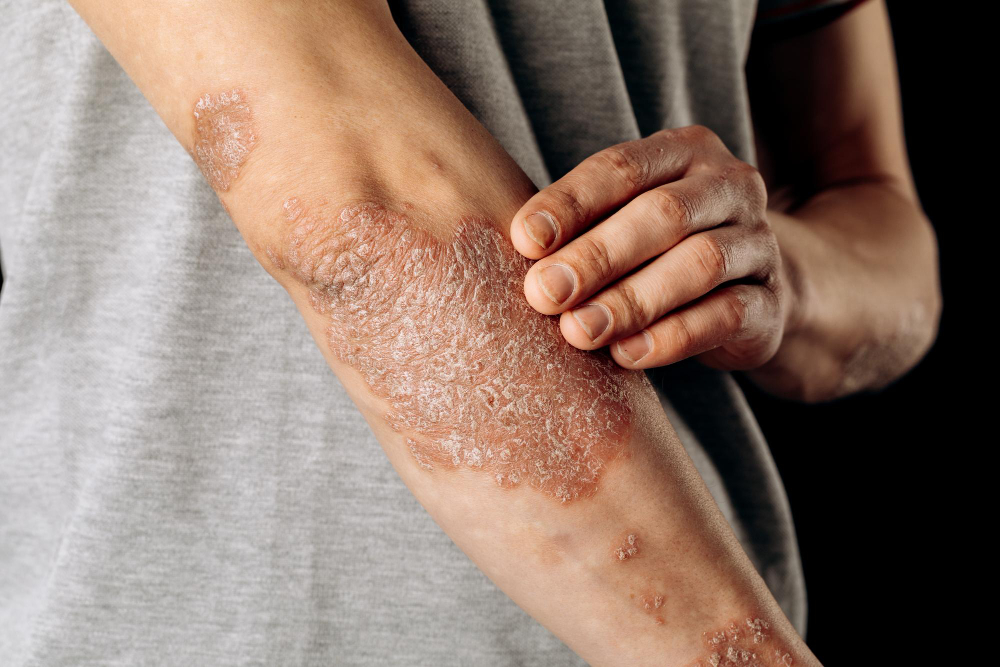
What is Psoriasis?
Psoriasis is a long-term skin condition that causes red, scaly patches. These patches can appear anywhere on the body. Often, they show up on the elbows, knees, scalp, or lower back. Although psoriasis is not contagious, it can affect your daily life. Many people want to know about psoriasis symptoms and how to manage psoriasis. Understanding this condition can help you find the right care.
Common Symptoms of Psoriasis
Psoriasis symptoms can vary from person to person. However, there are some signs that are more common. For example, you may notice:
Sometimes, symptoms get worse during certain times. For instance, cold weather or stress can trigger flare-ups. But, with the right care, you can manage these symptoms.
Causes and Risk Factors
Psoriasis happens when the immune system attacks healthy skin cells by mistake. As a result, new skin cells grow too quickly. This leads to the buildup of scales and red patches. Although the exact cause is not fully known, several risk factors can increase your chances:
Even though anyone can get psoriasis, it often starts between ages 15 and 35. However, it can develop at any age.
How Psoriasis is Diagnosed
Doctors use a few steps to make a psoriasis diagnosis. First, they will look at your skin. They may ask about your symptoms and family history. Sometimes, a small skin sample (biopsy) is taken. This helps rule out other skin problems. Usually, no special blood tests are needed. But, if you have joint pain, your doctor may check for psoriatic arthritis. Early diagnosis can help you find the best psoriasis treatment options.
Treatment Options for Psoriasis
There are many psoriasis treatment options. The right choice depends on how severe your symptoms are. Some common treatments include:
Sometimes, doctors use a mix of treatments for better results. But, you should always follow your doctor’s advice. Newer treatments, such as biologic drugs, may help people with severe psoriasis. These are often given by injection and target specific parts of the immune system.
Lifestyle Tips and Prevention
While you cannot prevent psoriasis, you can lower your risk of flare-ups. Here are some tips to help manage psoriasis:
Additionally, joining a support group can help you cope with the emotional side of psoriasis. Remember, small changes can make a big difference in how you feel.
When to See a Dermatologist
If you notice new or worsening psoriasis symptoms, it is important to see a dermatologist without delay. At Saavy Skin & Diagnostics Centre, early evaluation is advised if your skin becomes very painful, if you experience joint pain, or if current treatments are not giving relief. Timely care at Saavy Skin & Diagnostics Centre can help prevent complications and allow access to suitable psoriasis treatment options or supportive services.
In summary, psoriasis is a common but manageable skin condition. Consult a dermatologist at Saavy Skin & Diagnostics Centre for personalised advice on managing psoriasis effectively.