
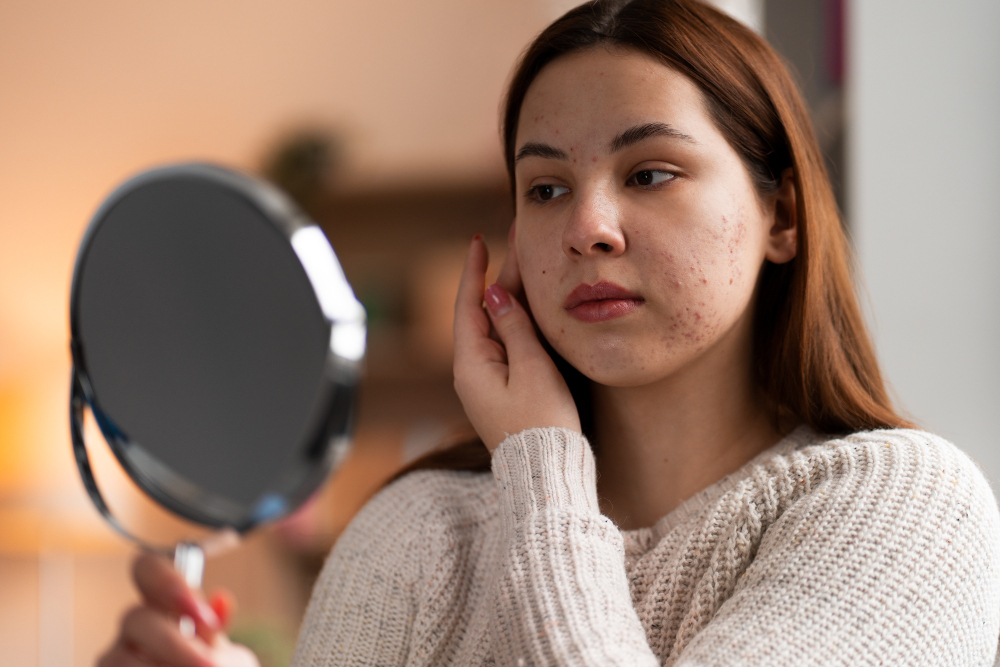
What Is Adult Acne (Ages 25+)?
Many people think acne only affects teenagers. However, adult acne (ages 25+) is common and can impact both men and women. In fact, studies show that acne in adults over 25 is rising. Adult acne causes frustration and can affect self-esteem. It often appears on the face, neck, chest, or back. While it may look like teenage acne, adult acne can last longer and be harder to treat. Understanding the causes and treatment for adult acne helps you manage it better.
Common Symptoms
Adult acne can show up in different ways. For example, you may notice:
Sometimes, these symptoms can last for weeks. But with the right care, you can reduce them.
Main Causes and Risk Factors
Several factors can lead to adult acne. Although the exact cause may differ for each person, common reasons include:
Additionally, wearing tight clothing or helmets can make acne worse. Knowing your risk factors helps you take action early.
How Adult Acne Is Diagnosed
Doctors usually diagnose adult acne by looking at your skin. They may ask about your health history and daily habits. Sometimes, they check for other skin problems that look like acne. In rare cases, blood tests help find hormone issues. But most of the time, a simple skin exam is enough. If you have sudden or severe acne, see a dermatologist for a full checkup.
Effective Treatment Options
Treating adult acne often needs a mix of methods. Because each person is different, what works for one may not work for another. Common treatment options include:
It may take several weeks to see results. Therefore, always follow your doctor’s advice and do not stop treatment early.
Lifestyle Tips for Managing Adult Acne
Simple changes can help control acne in adults over 25. Try these tips:
With these habits, you may notice fewer breakouts over time.
Prevention Strategies
While you cannot always prevent adult acne, some steps lower your risk. For instance:
Even small changes can make a big difference in your skin’s health.
When to See a Dermatologist
Sometimes, home care is not enough. You should see a dermatologist if:
Early treatment can prevent lasting skin problems. Moreover, a dermatologist can suggest the best plan for your needs.
In summary, adult acne (ages 25+) is common but treatable. Consult a dermatologist at Saavy Skin & Diagnostics Centre for personalized advice on managing adult acne.